After working directly with people more than three decades, I am ready to teach EVERYONE about YOUR voice. After sitting with a million people on four continents, I have discovered was that the idea of YOUR voice is being used synonymously with voting, buying things, and using technology. Some people even believe that only white people, men, adults, and wealthy people have a voice. The Personal Engagement Institute exists to show the world otherwise. Here is our intro to YOUR voice!
Defining YOUR Voice
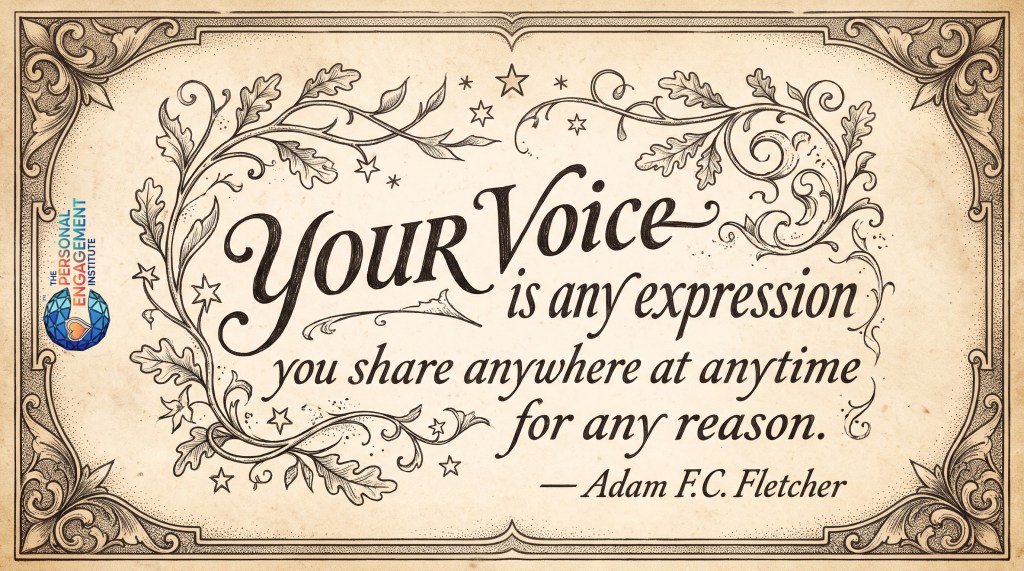
YOUR Voice is any expression you share anywhere at anytime for any reason. It’s really important to understand that whether you know it or not, whether you’re doing it on purpose or by accident, you are always sharing YOUR voice.
Your voice is not a synonym for voting, spending money, or using tech. Not just Americans, middle class, highly educated, or men have a voice. YOUR voice does not exist just for other people to hear.
Instead, YOUR voice is YOURS! It’s a varied, diverse, non-prescriptive and hyper-consequential reality throughout our whole lives, including our families, communities, work, groups, and societies. YOUR voice is everywhere YOU are.
When we welcome and embrace ALL voices, people can anticipate when, where, why and who their voices are sought, approved, and applied. This is one way YOUR voice is heard.
Another way your voice is heard is by YOU. Seeing the ways your actions, ideas, knowledge, beliefs, ideals, appearances, and more happen, you can learn that YOUR voice matters right now.
What Is YOUR Voice?
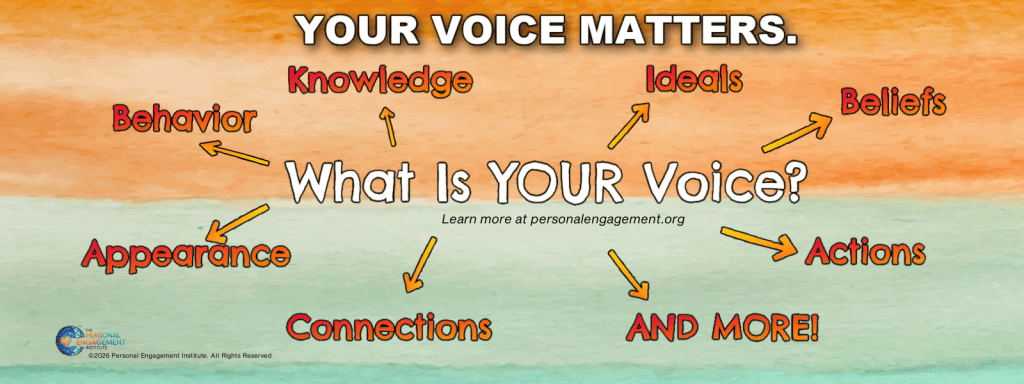
YOUR voice is not everything you do, but it can be anything you do. YOUR voice does not require actual words or vocalization, particular ways of speaking or certain jargon. Instead, YOUR voice is every expression of any person, including…
- Behavior that is demonstrated through actions, attitudes and cultures, words and deeds, and more shares YOUR voice.
- Appearance that includes clothing, hair, facial expressions, body modifications, gestures and postures and more expresses YOUR voice.
- Beliefs shared as ideas, knowledge, opinions and thoughts through conversation, protests, social media, memes, teaching, and more are types of YOUR voice.
- Knowledge including wisdom, theories, stories, research, and more are expressions of YOUR voice.
- Ideals such as morals, values, principles and purposes are ways YOUR voice is expressed.
- Connections to your family, friends, neighbors, peers, communities, faith, education, personal relationships and ourselves are ways of sharing YOUR voice.
- Actions including our life experiences, cultural expressions, value orientations, artistic activities, personal space, work, and the people we surround ourselves are all types of YOUR voice.
- AND MUCH MORE!
All of this is YOUR voice.
Points to Remember:
- It is not up to anyone but you yourself to parse out, discern, determine, vet or otherwise interpret YOUR voice.
- It is vital to remember that YOUR voice does not require anyone’s acceptance, anyone’s guidance, or anyone else’s control.
- The question is not whether your are sharing your voice; it is whether you want to hear what you’re saying.
Where Does YOUR Voice Happen?
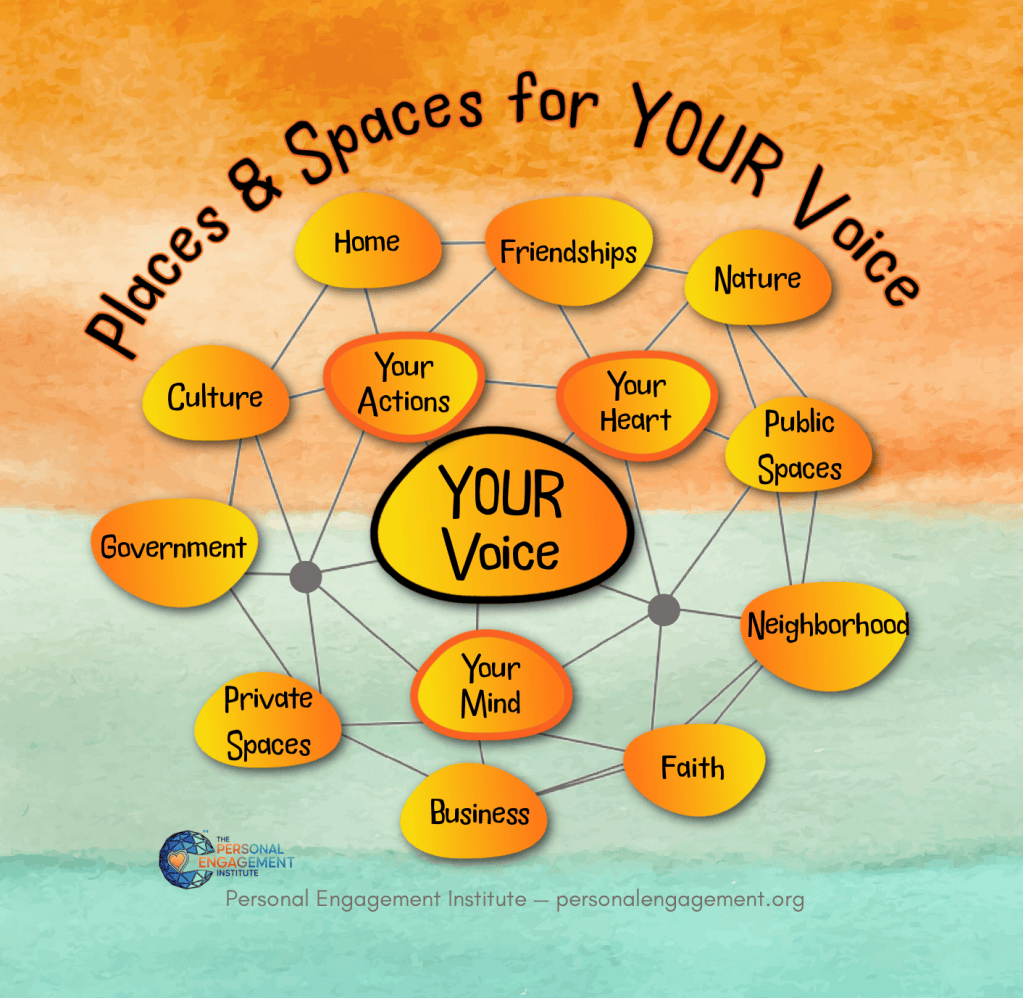
YOUR voice is everywhere you are, and cannot happen anywhere you are not. There is literally no limit to places and spaces for YOUR voice. YOUR voice can happen in…
- Heartspace
- Mind
- Body
- Soul
- Spirit
- Family
- Home
- Household
- Ancestry
- Neighborhood
- Community
- Workplace
- School
- Classroom
- Street
- Sidewalk
- Porch
- Kitchen
- Commute
- Highway
- Gardens
- Traffic
- Solitude
- Silence
- Nature
- Wilderness
- Forest
- Prairie
- Ocean
- River
- Cosmos
- Universe
- Friendship
- Feelings
- Politics
- Marriage
- Parenting
- Kinship
- Groups
- Teams
- Committees
- Gatherings
- Councils
- Diners
- Cafes
- Third-places
- Marketplaces
- Stores
- Counters
- Boards
- Coalitions
- Government
- Democracy
- Ballot
- Courthouse
- Townhalls
- Assembly
- Rallies
- Protests
- Movements
- Advocacy
- Culture
- Traditions
- Heritage
- Memory
- Office
- Storytelling
- Arts
- Partnership
- Thoughts
- Canvas
- Studio
- Stage
- Theater
- Page
- Journal
- Notebook
- Books
- Library
- Music
- Songs
- Choir
- Dance
- Movement
- Crafts
- Workshops
- Digital
- Internet
- Online
- Networks
- Screens
- Social-media
- Platforms
- Virtual
- Faith
- Sanctuary
- Altar
- Woodshop
- Rituals
- Meditation
- Contemplation
- Dialogue
- Crossroads
- Thresholds
- Everywhere
When we consider the ubiquity of YOUR voice and the constant presence of you in your own life, it is hard to imagine why our voices are not better engaged within our lives, throughout our communities, and across the whole world.
Barriers to YOUR Voice

When YOUR voice is not embraced for any reason, there is a barrier and consciously or unconsciously, you experience your voice being rejected. There are several barriers to YOUR voice that stop, limit, strangle, silence or otherwise prevent you from being heard, from mattering, from being authentic, or from otherwise being engaged in meaningful ways.
- Individual Barriers: Shown by you and others, these may include our attitudes, perspectives and mindsets. Individual barriers are shown through our own beliefs, deeds, ideas and outcomes.
- Cultural Barriers: The shared beliefs, common values and group think apparent throughout and around YOUR voice can be barriers. Cultural barriers are informal, and can be apparent in our casual conversations, collective actions, and group appearances.
- Structural Barriers: The formal elements of our groups, including policies and procedures, decision-making processes, and the control and authority can all be structural barriers to YOUR voice.
These barriers to YOUR voice happen despite or because of the age, identities, languages, appearances, education, activities, or other factors among everyone. This means the barriers to YOUR voice are all informed by the trauma, toxic stress, neurodivergence, racial identifies, gender orientation, socio-economic status and other realities you face throughout your life.
All of these barriers are driven by discrimination by us against our voices, including the bias toward others that leads to self-discrimination; as well as the addiction to the ideas, actions, appearance and position of OTHER people instead of ourselves.
YOUR voice is formed by intersectionality, and because of that the barriers to YOUR voice are intersectional, too. That means that along with discrimination overall, all of the following inform barriers against YOUR voice, too:
- Bias—prejudice in favor of or against one thing, person, or group compared with another, usually in a way considered to be unfair.
- Sexism—prejudice, stereotyping, or discrimination, typically against women, on the basis of sex.
- Transphobia—dislike of or prejudice against transsexual or transgender people.
- Favoritism—the practice of giving unfair preferential treatment to one person or group at the expense of another.
- Classism—prejudice against or in favor of people belonging to a particular social class.
- Discrimination—the unjust or prejudicial treatment of different categories of people or things, especially on the grounds of race, age, or sex.
- Homophobia—dislike of or prejudice against homosexual people.
- Ableism—discrimination in favor of able-bodied people.
- Favoring—feel or show approval or preference for.
- Anti-Semitism—hostility to or prejudice against Jews.
Encouraging YOUR Voice
You should make space for YOUR voice in all of its forms. You do not have to accept it or empower it, but you can understand YOUR voice, including what it is, where it comes from, what it intends to do, and why it matters. To lower the barriers to YOUR voice, you can find…
- Opportunities—Share opportunities for YOU to express yourself how you want to.
- Places & Spaces—You can create places and opportunities for you to become engaged how you want to, instead of having to do what other people want you to.
- Access—You can make spaces for YOUR voice to come and go freely and encourage your own freedom, whether that’s inside you, around you, or beyond.
- Considerations—You can see the all the ways YOUR voice matters throughout your life, instead of just focusing on the “big splashes” or massive impacts you have. Look at the little things and be considerate of all the ways you express yourself.
- Incentives—There are a lot of reasons to listen to YOUR voice right now, and even more reasons to share YOUR voice with the world. Acknowledge how you share your time, knowledge, skills and abilities.
- Consistency—Instead of treating YOUR voice as just a vote, just spending money, just using tech or whatever, you can learn to hear YOUR constantly, consistently and regularly throughout your life.
- Outcomes—By looping back to yourself and checking in about what happens when you share YOUR voice can encourage you to do it again. Otherwise you might feel like you’re talking into a vacuum with no accountability, responsiveness or meaning to what you are sharing—with others or with yourself!
There are so many other ways to encourage YOUR voice, too. What would you add to the list?
Launching Forward
The best way to support YOUR voice is to get busy recognizing it, anywhere and everywhere, right now. Here are some important things for you to know as you launch forward with YOUR voice.
5 Ways To Launch YOUR Voice Forward
- Start listening to YOUR voice. Right now, look at this moment, this place, and what you’re doing. Is this your voice? If it is not, what is? Simply hear YOUR voice in this moment.
- Share YOUR voice on purpose. When you talk, listen, act, think, feel, or otherwise express yourself, do it on purpose.
- Follow the guidelines above to listen to YOUR voice throughout your life.
- Advocate and create places for YOUR voice in your own life, work, community, and the world.
- Anytime you can, make space for YOUR voice everywhere, all the time.
5 Things To Remember About YOUR Voice
As you launch forward, remember that sometimes…
- Your voice can be expressed by not sharing your voice.
- Your voice is shared by what you choose over and over inside of you, not just what you share outside of you.
- Your body can express your voice long before your mouth opens.
- Your voice does not require an audience.
- Your voice is not limited by boxes, moments, or circumstances.
YOUR voice doesn’t have to be overwhelming, massive or huge — however, it should be apparent, obvious and allowed to yourself everywhere that you are, right now. What are YOU going to do to launch YOUR voice forward?
Ready to Take Action?
Want training, consulting or other services to launch YOUR voice forward? Check out our resources!
Learn On Your Own…